
Your Garage Door Works Hard — Are You Taking Care of It?
Think about how many times you open and close your garage door each day. If you're like most La Jolla homeowners, it's at least two to four times daily — sometimes more. That adds up to well over a thousand cycles per year, and every single one puts stress on springs, cables, rollers, and hardware.
Despite being the largest moving part of your home, the garage door is one of the most neglected when it comes to routine maintenance. Most people don't give it a second thought until it makes a terrible noise, gets stuck halfway, or stops working entirely on a Monday morning when they're already running late.
The good news? A little preventive maintenance goes a long way. Here's what you need to know about how often to service your garage door and what that service should include.
The Short Answer: At Least Once a Year
At minimum, your garage door should receive a professional inspection and tune-up once per year. Think of it like an annual physical for your home — a trained technician can catch small problems before they turn into expensive repairs or dangerous failures.
That said, there are situations where more frequent service makes sense:
- Heavy daily use: If your garage door opens and closes six or more times per day, consider service every six months.
- Coastal environments: Living near the ocean in La Jolla, Del Mar, or Pacific Beach means your garage door hardware is exposed to salt air, which accelerates corrosion on springs, tracks, and metal components.
- Older garage doors: Doors that are 10 years or older benefit from more frequent checkups as parts begin to wear.
- After severe weather: High winds, heavy rain, or unusual temperature swings can knock components out of alignment.
What Does Professional Garage Door Maintenance Include?
A proper maintenance visit isn't just someone glancing at your door and saying it looks fine. Here's what a thorough service appointment should cover:
Visual Inspection
The technician examines every visible component — panels, weatherstripping, tracks, springs, cables, hinges, rollers, and brackets. They're looking for signs of wear, rust, fraying, cracks, or misalignment that could lead to problems down the road.
Spring Assessment
Garage door springs are under enormous tension and have a finite lifespan, typically rated for around 10,000 cycles. A technician will check spring condition, balance, and tension. Catching a weakening spring before it snaps can save you from a sudden breakdown — or worse, a safety hazard.
Lubrication
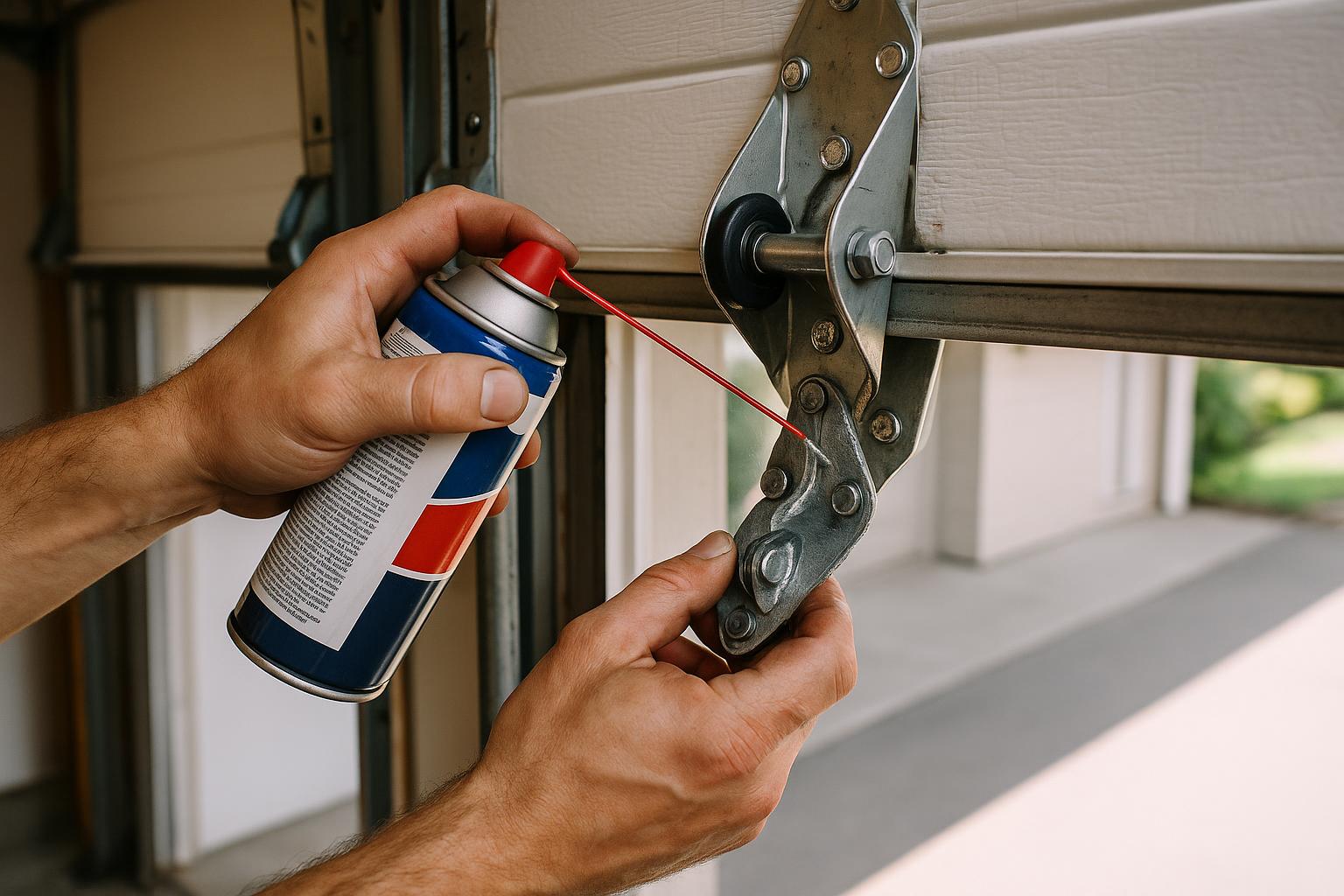
Moving parts need proper lubrication to function smoothly and quietly. This includes the springs, hinges, rollers, and bearing plates. The right lubricant reduces friction, minimizes noise, and extends the life of your hardware. A word of caution: using the wrong product, like WD-40 on springs, can actually do more harm than good. Professional-grade garage door lubricant is specifically designed for these components.
Track Alignment and Cleaning
Even slightly misaligned tracks can cause your door to bind, shake, or operate unevenly. During maintenance, the technician checks that tracks are properly aligned, securely mounted, and free of debris.
Cable Inspection
Cables work in tandem with your springs to lift and lower the door safely. Frayed or worn cables are a serious safety concern and should be replaced immediately. This is something most homeowners can't easily see on their own, making professional inspection essential.
Opener Testing
If you have an automatic garage door opener, the technician will test its operation, check the drive mechanism, and verify that safety features like auto-reverse and photoelectric sensors are functioning correctly. These safety features are required by federal law for a reason — they prevent the door from closing on people, pets, or objects.
Balance Test
A properly balanced garage door should stay in place when manually lifted to about waist height and released. If it falls or rises on its own, the spring tension needs adjustment. An unbalanced door forces your opener to work harder, shortening its lifespan significantly.
Weatherstripping Check
The rubber seals along the bottom and sides of your door keep out rain, dust, pests, and drafts. Over time, weatherstripping cracks and deteriorates, especially in sunny climates like San Diego's. Replacing worn seals is an inexpensive fix that improves energy efficiency and keeps your garage clean.
What You Can Do Between Professional Visits
While annual professional service is important, there are simple things you can do monthly to keep your garage door in good shape:
- Listen for unusual sounds. Grinding, squealing, or popping noises are early warning signs that something needs attention.
- Watch the door operate. It should move smoothly without jerking, hesitating, or shaking. Uneven movement often indicates a spring or track issue.
- Test the auto-reverse. Place a roll of paper towels in the door's path and press the close button. The door should reverse immediately upon contact. If it doesn't, call a professional right away.
- Keep tracks clear. Wipe down the inside of the tracks with a damp cloth to remove dirt and buildup. Don't lubricate the tracks themselves — this can cause the rollers to slide instead of rolling properly.
- Check the door's appearance. Look for dents, cracks, peeling paint, or rust spots on metal doors. Addressing cosmetic issues early prevents structural deterioration.
The Cost of Skipping Maintenance
Homeowners sometimes skip maintenance to save money, but this almost always costs more in the long run. Here's a quick comparison:
- Annual maintenance visit: Typically a modest, predictable expense.
- Emergency spring replacement: Significantly more expensive, especially if it requires after-hours service.
- Full opener replacement: An opener that's been straining against an unbalanced door for years will fail prematurely.
- Complete door replacement: Neglected doors can deteriorate to the point where repair is no longer practical.
Beyond the financial argument, there's a safety consideration. A garage door weighing several hundred pounds with a broken spring or frayed cable is genuinely dangerous. Regular maintenance is the best way to protect your family.
Why Coastal Living Demands Extra Attention
If you live in La Jolla, Solana Beach, or any of the coastal communities around San Diego, your garage door faces challenges that inland homeowners don't. Salt-laden ocean air is corrosive, and it takes a toll on metal springs, hinges, tracks, and fasteners. We regularly see accelerated rust and corrosion on garage doors just blocks from the beach.
For coastal homes, we recommend applying a corrosion-resistant lubricant during maintenance and keeping an eye on any exposed metal components between service visits. Catching rust early and treating it can add years to your hardware's lifespan.
Schedule Your Garage Door Tune-Up
If it's been more than a year since your last garage door service — or if you can't remember the last time — it's time to schedule a maintenance visit. At La Jolla Garage Door, we provide thorough inspections and tune-ups for homeowners across La Jolla, University City, Clairemont, Pacific Beach, Del Mar, and Solana Beach. We'll make sure every component is in safe working order and let you know about any issues before they become emergencies.
Don't wait for a breakdown to think about your garage door. A little preventive care today saves you time, money, and headaches tomorrow.