
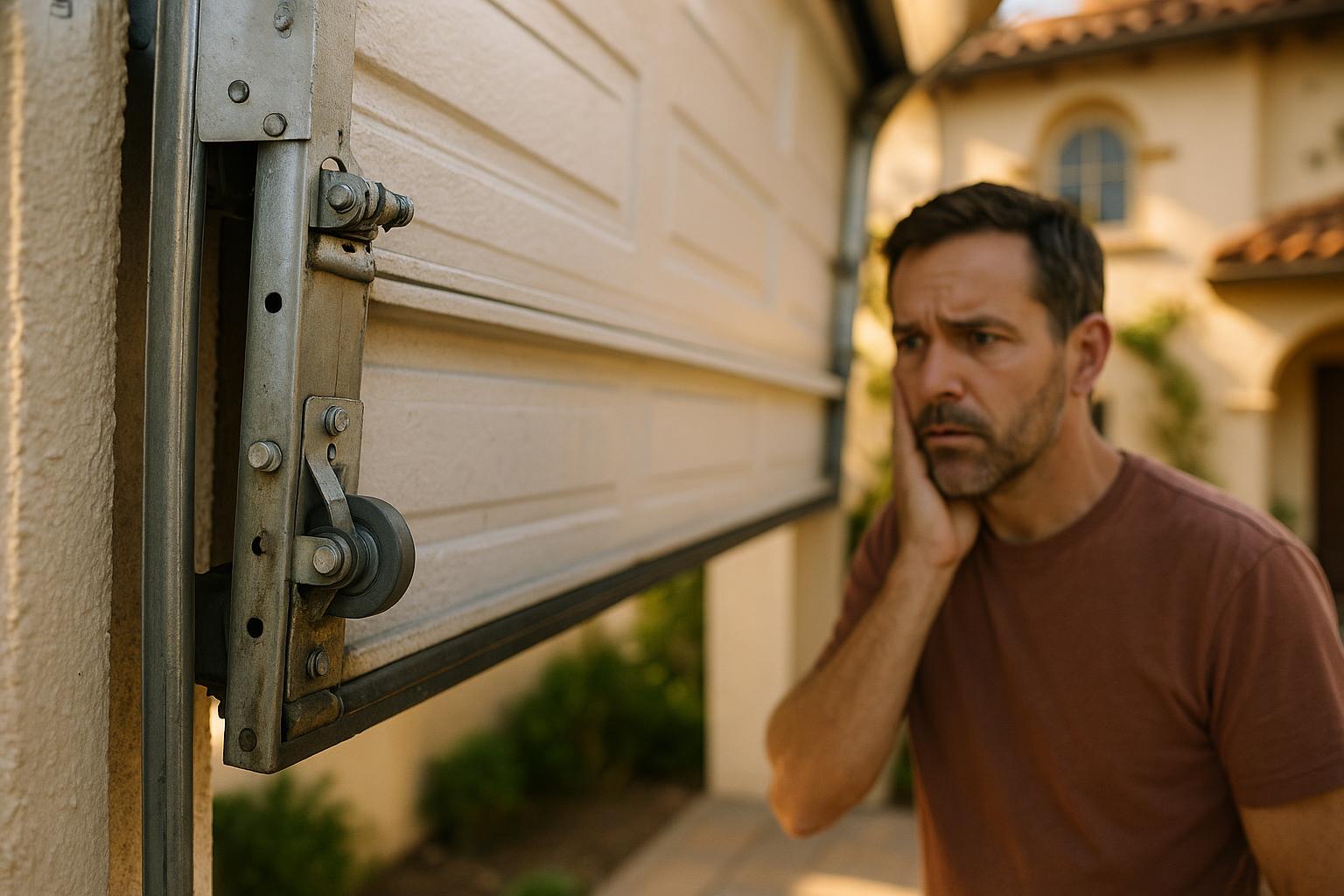
Your Garage Door Shouldn't Sound Like That
You press the button, and instead of the smooth hum you're used to, your garage door groans, screeches, or bangs its way open. If you're a homeowner in La Jolla, you've probably experienced this at least once — and you've probably wondered whether it's something serious or just a minor annoyance.
The truth is, garage doors are mechanical systems with dozens of moving parts. Over time, those parts wear down, loosen, or fall out of alignment. The noises they make when that happens aren't random. Each sound points to a specific problem, and understanding what your garage door is telling you can save you from expensive repairs — or a complete breakdown at the worst possible time.
Here's a guide to the most common garage door noises, what causes them, and what you should do about each one.
Grinding or Scraping Sounds
A grinding noise when your garage door opens or closes is one of the most common complaints we hear from homeowners. It usually means one of two things:
- The rollers are worn out. Metal rollers, especially older steel ones without bearings, grind against the track as they wear down. If your rollers haven't been replaced in several years, this is the most likely culprit.
- The tracks are misaligned. When the vertical or horizontal tracks shift even slightly, the door drags against them instead of gliding smoothly. You might also notice the door hesitating or sticking at certain points during travel.
Worn rollers are a straightforward fix — upgrading to nylon rollers can eliminate the grinding noise entirely and make your door significantly quieter. Track misalignment requires a professional adjustment to ensure the door moves safely and evenly.
Squealing or Squeaking
A high-pitched squeal every time your garage door moves is hard to ignore, especially in a quiet La Jolla neighborhood early in the morning. This sound almost always comes down to one issue: lack of lubrication.
Your garage door's hinges, rollers, springs, and bearing plates all need periodic lubrication to function quietly. When metal components rub against each other without adequate lubrication, you get that unmistakable squeal.
What You Can Do
Apply a silicone-based or lithium-based garage door lubricant to the following components:
- Hinges (where the roller stem meets the hinge)
- Rollers (the bearings, not the track surface)
- Torsion springs
- Bearing plates at the top of the door
Avoid using WD-40 as a long-term lubricant. It works as a solvent and cleaner, but it doesn't provide lasting lubrication the way a dedicated garage door spray does. If the squealing persists after lubrication, the components themselves may be worn and need replacement.
Loud Banging or Popping
A sudden bang or pop when the door starts moving is startling, and it can signal a more serious problem. Common causes include:
- Torsion spring issues. If a torsion spring is under uneven tension or beginning to weaken, it can produce a loud popping sound as it engages. This is not something to ignore — spring failure can be dangerous.
- Panels flexing under stress. If a panel is damaged, warped, or improperly secured, it can pop or bang as the door changes direction. Coastal humidity and temperature swings in the San Diego area can contribute to panel warping over time, particularly with certain materials.
- Opener bracket or mounting issues. If the bracket connecting your opener to the door is loose, you may hear a bang each time the opener engages.
If you're hearing banging sounds, it's worth having a technician inspect the door. Spring and bracket problems can escalate quickly and pose safety risks.
Rattling or Vibrating
A rattling garage door usually points to loose hardware. Your garage door cycles up and down over a thousand times a year, and that constant motion gradually loosens nuts, bolts, and screws throughout the system.
Common Sources of Rattling
- Loose track bolts — The brackets holding the track to the wall can vibrate loose over time.
- Loose chain on a chain-drive opener — If your opener uses a chain drive, a slack chain will rattle and slap against the rail during operation.
- Worn hinges — Hinges with enlarged holes allow the rollers to shift and vibrate during travel.
Tightening the hardware is a good DIY starting point, but be careful not to overtighten track bolts — the tracks need to remain properly spaced for the door to function. If you have a chain-drive opener and the noise bothers you, consider upgrading to a belt-drive opener, which operates almost silently.
Continuous Humming or Buzzing
If your garage door opener runs and hums but the door doesn't move, the motor is engaging but the drive mechanism isn't connecting to the door. This can happen when:
- The disconnect switch or cord has been activated (often pulled accidentally)
- The drive gear inside the opener is stripped
- The opener's force settings need adjustment
Check the disconnect switch first — it's the most common and simplest explanation. If the switch is engaged and the door still won't move, the internal gear may need replacement. This is a common repair on openers that are more than seven or eight years old.
When Noise Means It's Time to Call a Professional
Some garage door noises are minor inconveniences you can address yourself with a can of lubricant and a socket wrench. Others are early warnings of mechanical failure. Here's a simple rule of thumb:
- Squeaking or light rattling — Try lubrication and hardware tightening first.
- Grinding, banging, or popping — Have a professional inspect the door before the problem gets worse.
- Any noise combined with the door not moving properly — Stop using the door and call for service.
Ignoring unusual sounds doesn't just risk a breakdown — it can lead to damage to your door panels, opener, or the door frame itself, turning a simple repair into a much more costly project.
Keep Your Garage Door Running Quietly in La Jolla
A well-maintained garage door should operate smoothly and relatively quietly. If yours has started making noises that weren't there before, something has changed — and addressing it early is always easier and cheaper than waiting for a failure.
At La Jolla Garage Door, we diagnose and fix noisy garage doors every day across La Jolla, Pacific Beach, University City, and the surrounding communities. Whether you need a roller replacement, a track adjustment, or a full opener upgrade, we'll identify the problem and give you a straightforward recommendation.
If your garage door is making a sound you can't explain, give us a call. We'll figure out what it's trying to tell you.