
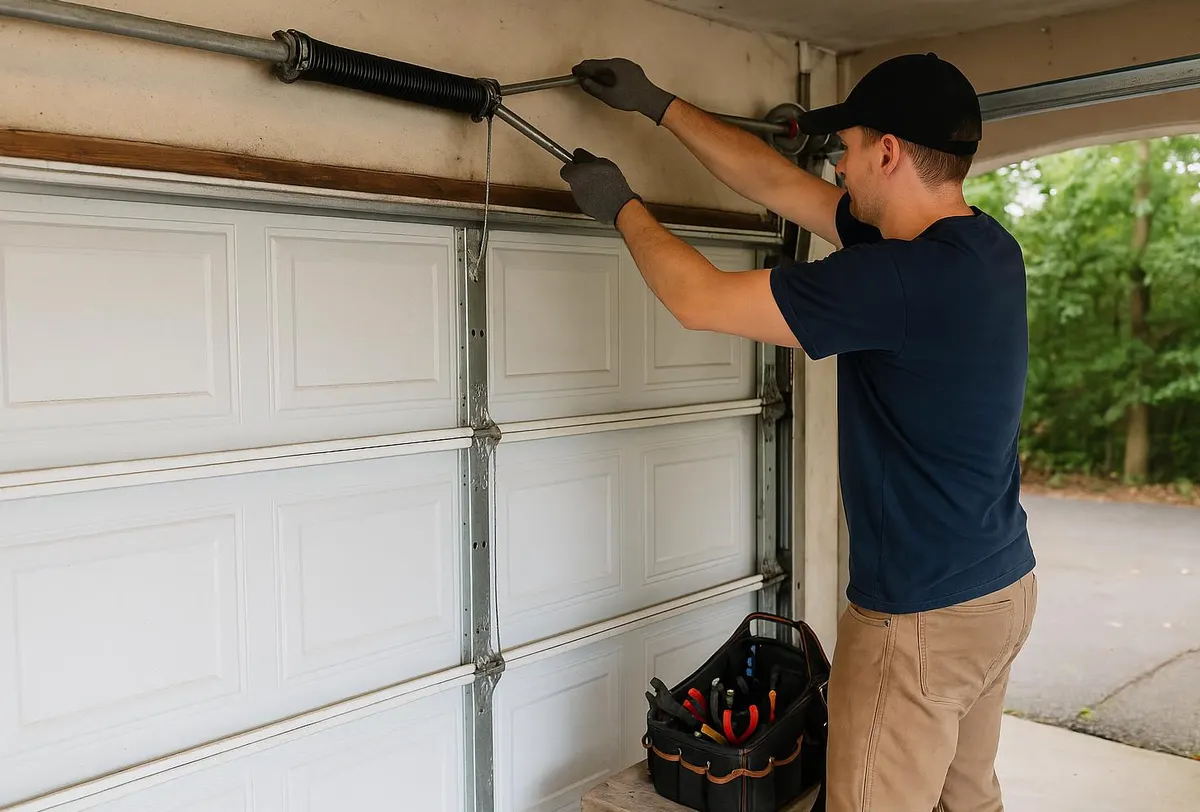
You pull into the garage after a grocery run and the door grinds its way down with a screech that makes you wince. Nothing's broken, nothing's stuck — it's just dry. Metal rubbing on metal, every time you come and go. Most homeowners reach for whatever's on the shelf, give the noisy spot a quick spray, and call it done. That's usually where the real problem starts.
Why This Matters More Near the Coast
Garage door hardware in coastal San Diego County deals with conditions that inland garages don't. Salt air works into hinge pins, roller shafts, and spring coils, speeding up corrosion even on hardware that looks fine from a few feet away. Then the dry season brings dust and, some years, wildfire smoke residue that settles into every moving joint. The wrong lubricant — or no lubricant at all — lets that grit grind away at metal parts every time the door cycles.
Tools and Supplies You'll Need
- A lithium-based white grease (sold as garage door lubricant at most hardware stores)
- A silicone-based spray lubricant for a lighter touch on certain parts
- A clean rag or shop towel
- A soft brush or old toothbrush for cleaning tracks
- A step stool or short ladder
- Work gloves
What to Use — and What to Avoid
Lithium grease is the workhorse here: it clings to metal, resists washing out in winter rain, and holds up well against salt exposure. Silicone spray is a good lighter option for opener rail systems and anywhere grease would attract too much dust. What you want to avoid is WD-40 as a long-term lubricant. It's a solvent and light penetrant, not a true lubricant — it displaces moisture and loosens grime in the short term, but it evaporates quickly and can actually strip existing lubrication, leaving parts drier than before. Skip standard motor oil too; it's too thin and runs off, and it drips onto the garage floor or your car.
Step-by-Step: Lubricating Your Garage Door
- Disconnect the opener. Pull the emergency release cord so you can move the door by hand and work safely without the motor engaging mid-task.
- Do a visual check first. Look over the springs, cables, hinges, and rollers for rust, fraying, or visible wear before you touch anything. Note anything that looks cracked or stretched — more on that below.
- Clean the tracks, don't grease them. Wipe down the metal tracks with a dry rag to remove dust and debris. Tracks should stay clean and dry; lubricant here attracts grit and makes the rollers slide instead of roll.
- Lubricate the hinges. Apply a small amount of lithium grease to each hinge joint where the door panels meet. Work the door up and down by hand a few times to let it settle into the joint.
- Lubricate the rollers — check the type first. Steel rollers benefit from a light coat of lithium grease on the bearings. Nylon rollers (common on quieter, newer installations) should only get a touch of silicone spray on the metal stem, never grease on the nylon wheel itself, since grease breaks down the material over time.
- Apply a light coat to the springs. A thin film of lithium grease along the coils reduces friction and slows rust, which matters a lot in salt air. Don't overdo it — a heavy coating just collects dust.
- Lubricate the opener's chain or screw-drive rail. A few drops of silicone spray along the rail keeps the opener running quietly without attracting the dust a grease would.
- Wipe off excess everywhere. Any lubricant left sitting on the surface just becomes a magnet for dust and pollen. A quick pass with a dry rag after each part keeps things clean.
- Reconnect the opener and test. Run the door up and down a few times by remote, listening for any remaining noise and watching for smooth, even movement.
Where DIY Should Stop
Lubricating hinges, rollers, and springs is safe homeowner territory as long as you're not touching spring tension or disassembling anything under load. What's not a DIY job: adjusting or replacing torsion springs, realigning tracks that have shifted, or diagnosing an opener that grinds even after lubrication — that's usually a gear or alignment issue inside the unit, not something oil fixes. If you spot frayed cables, a visibly stretched spring, or a door that's suddenly heavier to lift by hand, stop and have it looked at rather than lubricating around the problem.
When to Call La Jolla Garage Door
If your door is still noisy after a proper lubrication, or you noticed rust and wear during your inspection that goes beyond a light coat of grease, it's worth having a technician take a look. Our Garage Door Maintenance visits cover a full hardware inspection along with lubrication done to manufacturer spec, and if we find a spring or cable that's past the point of a quick fix, we handle Spring Replacement safely with the right tools and tension equipment — not something to attempt in a home garage.
If your garage door in La Jolla, Del Mar, Pacific Beach, or anywhere along the coast needs more than a can of lubricant can fix, call La Jolla Garage Door and we'll get it running quiet and smooth again.