
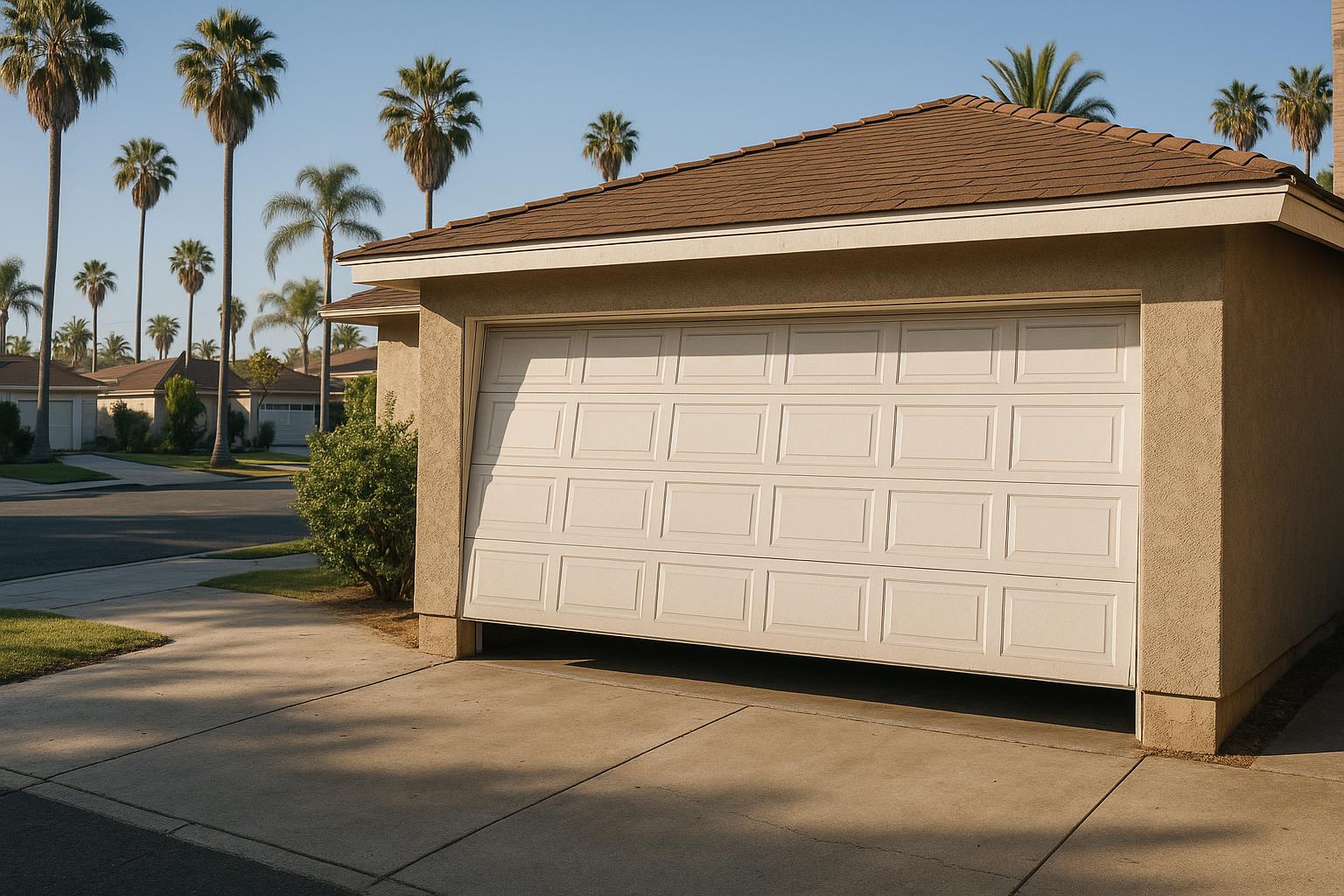
You're Running Late — and Your Garage Door Won't Budge
It's 7:15 a.m. You've got your coffee, your keys, and exactly enough time to make it to work. You press the garage door opener button and… nothing. Or maybe it groans, shudders, and stops halfway. Either way, you're not going anywhere.
This is one of the most common calls we get at La Jolla Garage Door, especially on cold mornings or after a stretch of damp coastal weather. The good news is that many causes of a stuck garage door are identifiable — and some are even fixable on the spot. Here's what to check before you call for help, and how to know when it's time to bring in a professional.
Step 1: Check the Obvious Things First
Before you assume the worst, rule out the simple stuff:
- Is the opener plugged in? It sounds almost too basic, but power cords get bumped, outlets trip, and surge protectors reset. Check that your garage door opener unit has power.
- Are the batteries in your remote dead? Swap in fresh batteries and try again. If the wall-mounted button inside the garage works but the remote doesn't, you've found your culprit.
- Is the door locked? Some garage doors have a manual lock — a handle or slide bolt on the inside. If someone engaged it, the opener will strain against a locked door and refuse to move.
These three checks take less than two minutes and solve the problem more often than you'd think.
Step 2: Look at the Safety Sensors
Every modern garage door has two small photo-eye sensors mounted near the floor on either side of the door opening. These sensors send an invisible beam across the doorway, and if anything breaks that beam, the door won't close — and in some cases, it won't open properly either.
Here's what to look for:
- Misaligned sensors: If one sensor has been bumped or shifted, the beam won't connect. Both sensors should have a steady light (usually green). A blinking light means they're out of alignment.
- Dirty lenses: In La Jolla's coastal environment, salt film and dust can build up on sensor lenses over time. A quick wipe with a soft cloth can restore the connection.
- Wiring issues: Check for loose or damaged wires running from the sensors to the opener unit. Rodents, lawn equipment, and general wear can compromise these connections.
Step 3: Inspect the Tracks and Rollers
Your garage door rides along metal tracks on both sides. If something is blocking the track, or if a roller has popped out of its channel, the door can jam or refuse to move entirely.
Stand inside the garage and visually inspect both tracks from top to bottom. Look for:
- Debris, dirt, or small objects lodged in the track
- Dents or bends in the track itself
- Rollers that have come loose or appear cracked and worn
You can carefully remove debris from the tracks, but do not attempt to bend or realign tracks yourself. Improperly adjusted tracks can cause the door to fall, creating a serious safety hazard.
Step 4: Listen to What the Opener Is Doing
When you press the button, pay attention to what happens — or doesn't happen. The behavior of your opener tells a lot about what's going wrong:
- No sound at all: This usually points to a power issue, a failed circuit board, or a burned-out motor.
- Motor hums but the door doesn't move: The opener's drive gear may be stripped. This is a common wear item, especially in openers that are more than 10 years old.
- The opener light flashes but nothing happens: Most openers use flash codes to indicate errors. Check your owner's manual — the number of flashes often corresponds to a specific problem like sensor misalignment or a lock-mode activation.
Step 5: Try the Emergency Release
Every garage door opener has a red emergency release cord hanging from the rail. Pulling this cord disconnects the door from the opener, allowing you to lift the door manually.
Important safety note: Only use the emergency release when the door is fully closed. If the door is partially open and a spring is broken, releasing it from the opener could cause it to slam down under its own weight.
If the door lifts smoothly by hand, the problem is likely with the opener itself. If the door feels extremely heavy or won't move manually, you're probably dealing with a broken spring or a mechanical issue with the door — and that's a job for a trained technician.
When to Call a Professional
Some garage door problems are safe to troubleshoot on your own. Others are not. Here's when to pick up the phone:
- Broken springs: Garage door springs are under extreme tension. Attempting to replace or adjust them without proper tools and training can result in serious injury. This is the single most dangerous DIY garage door repair.
- Damaged cables: If you see frayed or loose cables hanging near the bottom of the door, don't touch them. These cables work in tandem with the springs and carry significant force.
- Structural damage to the door: Warped, cracked, or bent panels can prevent the door from operating safely. A professional can assess whether individual panels can be replaced or if a full door replacement makes more sense.
- Repeated failures: If your door keeps getting stuck despite basic troubleshooting, there's likely an underlying issue that needs expert diagnosis.
Preventing Morning Surprises
The best way to avoid getting trapped in your garage on a Monday morning is regular maintenance. A professional tune-up once or twice a year keeps all the moving parts lubricated, catches worn components before they fail, and ensures your safety systems are working correctly.
This is especially important for homeowners in La Jolla and the surrounding coastal communities like Del Mar, Pacific Beach, and Solana Beach, where salt air and humidity accelerate wear on metal components, weatherstripping, and electrical connections.
At La Jolla Garage Door, we recommend scheduling a maintenance visit before the cooler, damper months set in — that's when most stuck-door calls come in, and a little prevention goes a long way.
Stuck Right Now? We Can Help.
If your garage door won't open and you've worked through the steps above without success, give us a call. We serve homeowners and businesses throughout La Jolla, University City, Clairemont, and the greater San Diego coastal area with prompt, professional garage door repair. We'll diagnose the problem, explain your options clearly, and get your door moving again — so you can get on with your day.