
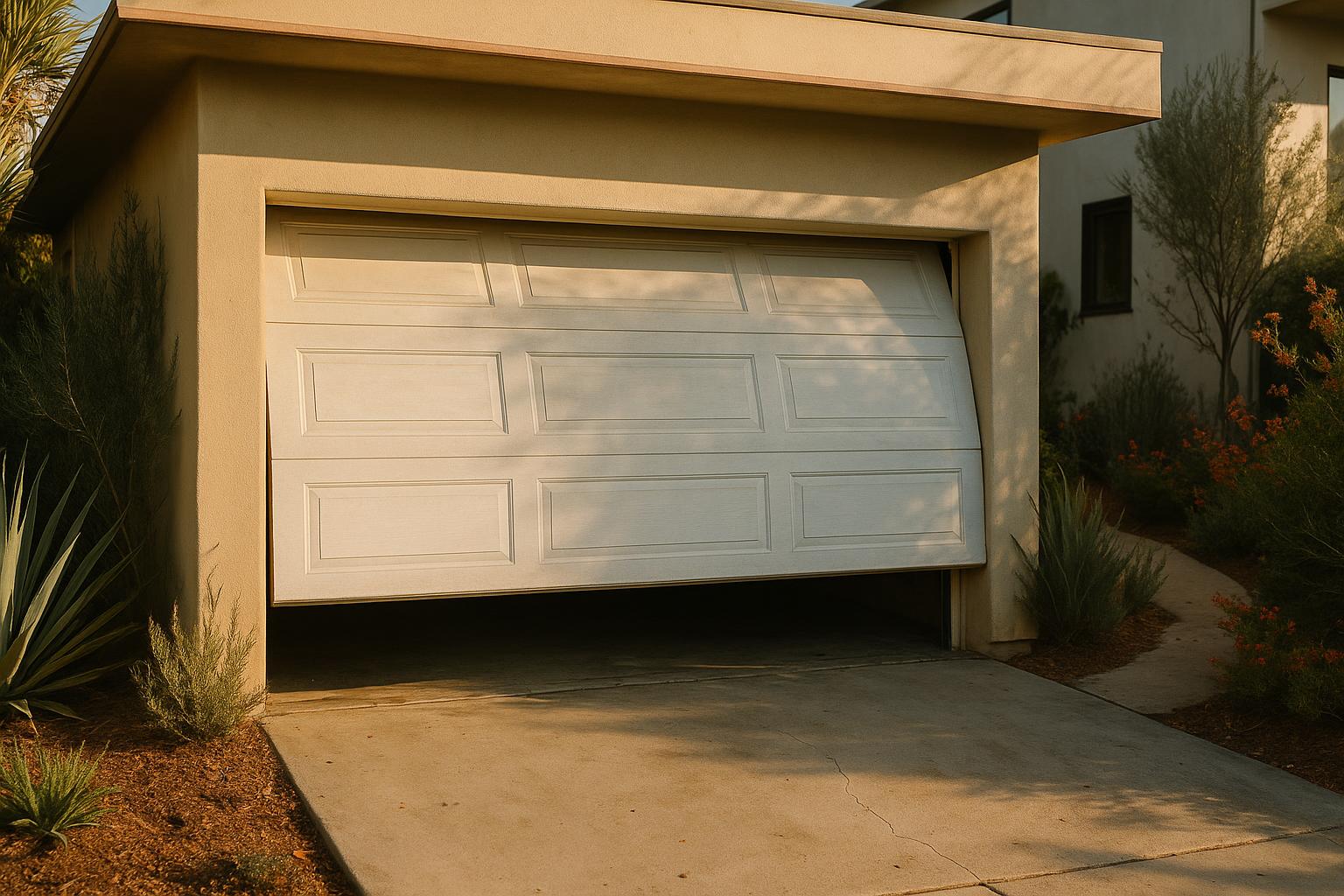
That Frustrating Moment When Your Garage Door Won't Stay Closed
You press the button on your remote, watch the garage door glide downward, and then — just before it reaches the floor — it stops and reverses right back up. You try again. Same thing. Maybe it works on the third attempt, maybe it doesn't. Either way, you're standing in your driveway in La Jolla wondering what just happened.
This is one of the most common garage door complaints we hear from homeowners, and the good news is that it's almost always fixable. The bad news? Ignoring it can leave your garage — and everything inside it — exposed to the elements, pests, and potential intruders.
Let's walk through the most common reasons your garage door reverses before reaching the ground and what you can do about each one.
1. Misaligned or Dirty Safety Sensors
Every garage door opener manufactured after 1993 is required to have photo-eye safety sensors mounted near the bottom of the door tracks, about six inches off the ground. These sensors send an invisible beam across the opening, and if anything breaks that beam — a bike, a trash can, a child — the door automatically reverses to prevent injury or damage.
The problem is that these sensors are sensitive. Over time, they can become misaligned from a bump, vibration, or even settling of the garage structure. Coastal humidity and salt air here in La Jolla can also cause corrosion on the sensor connections. Dust, cobwebs, and grime on the sensor lenses can block the beam entirely.
What to Try
- Check that both sensors have a steady green or amber light. A blinking light usually means misalignment.
- Gently wipe the sensor lenses with a soft cloth.
- Make sure nothing is blocking the path between the two sensors.
- Check that the sensor brackets haven't shifted — they should point directly at each other.
If cleaning and realigning doesn't solve the issue, the sensors or their wiring may need professional attention.
2. Incorrect Close-Limit Settings
Your garage door opener uses limit settings to determine how far the door should travel when opening and closing. If the close-limit setting is off, the opener may think the door has hit an obstruction when it's actually just reaching the floor. The safety mechanism kicks in and reverses the door.
This is especially common after a new opener installation, a spring replacement, or even seasonal temperature changes that cause metal tracks and hardware to expand or contract slightly. In San Diego's coastal climate, where mornings can be cool and afternoons warm, these small shifts add up over time.
What to Try
- Consult your opener's manual to locate the limit adjustment screws — they're usually on the back or side of the motor unit.
- Make small adjustments (a quarter turn at a time) to the close-limit screw.
- Test the door after each adjustment.
If you're not comfortable making these adjustments, it's a quick fix for a professional technician and well worth the service call to get it dialed in correctly.
3. Worn or Broken Springs
Garage door springs do the heavy lifting — literally. They counterbalance the weight of the door so the opener motor doesn't have to do all the work. When springs wear out or lose tension, the door becomes heavier than the opener expects. The motor strains, the safety system detects excessive resistance, and the door reverses.
You might also notice the door closing unevenly, making loud groaning sounds, or feeling unusually heavy if you try to operate it manually. Broken springs are one of the most common repairs we handle for homeowners throughout La Jolla, Del Mar, and Pacific Beach.
Important: Garage door springs are under extreme tension and can cause serious injury if handled improperly. This is not a DIY repair. Always call a qualified technician for spring replacement.
4. Track Obstructions or Damage
The metal tracks on either side of your garage door guide it smoothly up and down. If those tracks are bent, dented, or have debris stuck in them, the door can bind or catch during operation. When the opener senses that resistance, it interprets it as an obstruction and reverses.
What to Try
- Visually inspect both tracks for dents, bends, or gaps.
- Look for small objects, dirt buildup, or hardened grease in the track channels.
- Check that the tracks are securely fastened to the wall brackets.
Minor debris can be cleaned out carefully, but bent or damaged tracks should be repaired or replaced by a professional to ensure the door operates safely.
5. Worn Rollers or Hinges
Garage door rollers and hinges endure thousands of cycles over their lifespan. As they wear down, they create friction and resistance in the tracks. This added resistance can trigger the opener's auto-reverse feature, especially as the door nears the fully closed position where gravity is no longer helping it along.
Nylon rollers tend to last longer and run quieter than steel rollers, and they're a popular upgrade for homeowners in quieter residential neighborhoods. If your rollers look cracked, chipped, or wobbly, it's time for a replacement.
6. Issues With the Opener Itself
Sometimes the problem isn't mechanical at all — it's the opener's logic board or motor. Electrical surges, age, and general wear can cause the opener to malfunction. If you've ruled out sensors, springs, tracks, and limit settings, the opener's internal components may be the culprit.
Signs that your opener may be failing include inconsistent behavior, unusual buzzing or clicking sounds from the motor unit, and the door working fine sometimes but not others. Modern openers from brands like LiftMaster, Chamberlain, and Genie are more reliable than older models, and upgrading can solve persistent issues while adding features like smartphone control and battery backup.
When to Call a Professional
Some of the fixes above — cleaning sensors, clearing track debris — are reasonable for a handy homeowner to attempt. But if the problem persists after basic troubleshooting, or if you suspect spring, track, or opener issues, it's time to bring in a professional.
At La Jolla Garage Door, we diagnose and repair reversing issues every week for homeowners across La Jolla, University City, Clairemont, and the surrounding coastal communities. Our technicians arrive on time, identify the root cause quickly, and get your door working properly — usually in a single visit.
Don't Leave Your Garage Exposed
A garage door that won't close all the way isn't just an inconvenience. It's a security risk, an energy efficiency problem, and an invitation for moisture, pests, and debris to enter your home. The longer you put off addressing it, the more likely a small issue becomes a bigger, more expensive repair.
If your garage door is reversing and you can't figure out why, give us a call. We'll get it sorted out so you can get back to your day — and keep your garage secure.